
Common Sports Injuries and How Physical Therapy Can Help
There’s nothing like the thrill of scoring a goal or racing through a finish line in first place. Unfortunately, several common sports injuries can dampen the excitement of being an athlete. Take Sarah, for example. This avid soccer player twisted her knee during a game, but fortunately, she turned to physical therapy at TFI Physical Therapy & Sports Performance for help.
So, what did we do to help Sarah? We started with a detailed assessment of her injury, ultimately determining she had suffered a minor ligament sprain. The damage wasn’t enough to require surgery, but she did need to undergo rehabilitation.
We created a personalized treatment program that guided her through the stages of rehabilitation. We helped reduce her pain, improved her mobility, and worked with her to gradually restore strength and function in her knee, which helped reduce the risk of future injuries.
While it took some time, Sarah eventually saw a noticeable improvement and slowly returned to her usual activities, including soccer practice and, eventually, soccer games.
Sports-related injuries like Sarah’s are not unusual. Sprains, strains, overuse injuries, and more can happen to anyone engaged in physical activity. Today, we want to explore some of the more common sports injuries we see at our (town) clinic and how physical therapy can help.
Common Sports Injuries Of the Legs: Shin Splints
Shin splints occur due to overuse or repeated movements on the shinbone and the surrounding muscles. This stress leads to inflammation, which causes pain. Several factors can contribute to shin splints, but we mostly see them develop when someone starts an intense new exercise program without proper preparation.
Symptoms of Shin Splints
- Sharp or throbbing pain in the lower leg
- Tenderness along the shinbone
- Mild swelling
- Pain that worsens with activity and improves with rest
How Can Physical Therapy Help?
We’ll start by using techniques like manual therapy, targeted stretches, and pain-relieving modalities to reduce pain and inflammation in the affected area. Next, we’ll work to strengthen the muscles around the shin, which helps support the tibia and reduce stress on the bone. Improving lower leg strength helps prevent shin splints from recurring.
We’ll also usually incorporate gait analysis into a shin splint treatment program. We’ll analyze your running or walking patterns to identify any issues contributing to shin splints and then recommend corrections to improve your form and reduce stress on your shins.
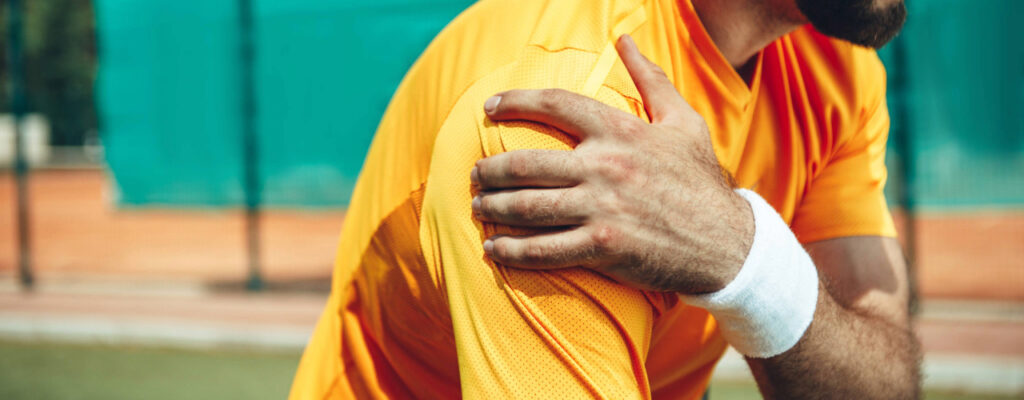
Common Sports Injuries Of the Shoulder: Rotator Cuff Tears
The rotator cuff is a group of four muscles and tendons that stabilize the shoulder joint. Tears in the rotator cuff are especially common among people who perform frequent overhead movements, like swimmers and baseball players. They often develop due to overuse.
Symptoms of Rotator Cuff Tears
- Persistent pain in the shoulder, especially when lifting the arm
- Weakness in the shoulder
- Limited range of motion
How Can Physical Therapy Help?
We’ll start you off with some hands-on manual therapy techniques to reduce pain, improve shoulder mobility, and promote blood flow to the area, which can promote healing. Next, we’ll guide you through exercises designed to build strength in the rotator cuff, helping to improve muscle balance and reduce strain on the injured tissue.
We’ll also help you pinpoint activities that might further strain your shoulder and show you modifications to avoid them. We can also share some preventative strategies, such as cross-training, to keep your rotator cuff healthy.
Common Sports Injuries Of the Knee: ACL Tears
ACL tears are one of the more notorious sports injuries. The ACL is a ligament in your knee, and tears often result from sudden stops or changes in direction. Many athletes opt for surgery to repair an ACL tear so they can fully return to play, and physical therapy plays an essential role in rehabilitation after the procedure.
Symptoms of ACL Tears
- A popping sensation at the time of injury
- Severe pain and swelling
- Instability or a feeling that the knee might “give out” during movement
- Reduced range of motion
How Can Physical Therapy Help?
In most cases, we’re here to help you rehabilitate after an ACL repair surgery. In the early stages of your rehabilitation, we’ll focus on reducing pain and preventing scar tissue formation, which can cause long-term problems. Early mobilization is critical.
As you improve, we’ll work on restoring your knee’s range of motion with targeted mobilization exercises, then move on to strengthening the muscles that support the knee joint. We’ll also help you restore your balance and stability. In the final stages of rehabilitation, we’ll work with you on regaining functional movements, including preparing you to return to your chosen sport.
Personalized Sports Injury Treatment
The TFI Physical Therapy & Sports Performance team is here to help you navigate several common sports injuries. No matter what’s giving you trouble, we’ll find a solution that suits your needs. Schedule an appointment today to learn more about how we can help you.